Tommy Gate - G2 Series - Pickup and Service Body Operation


7/25/18
Custom Designed Welders Bodies by Harbor Truck Bodies


It seems that there's no such thing as a standard Welder Body because every welder want something different.Harbor can custom build a Welders Body for each customers unique needs.Here's a 9' Low Pro 34" Open Top Service Body with Stainless Steel lids and with slightly raised front compartments to the standard height of 40" closed compartment style.
This also has a small sized transverse compartment with two compartments for tall gas bottles in storage, while in the main front compartment are bottle brackets and rings for short gas bottles. This also has the rear compartment cut off and an 18" work platform with V-groove on the back plus the standard 8" step bumper.
This is all mounted on a new Dodge 3500 regular cab chassis and makes for a very clean looking rig.
Let Harbor create a unique body for you! Call 800-433-9452. www.htbi.net
7/23/18
Test drive: Severe duty International HV delivers driver comfort
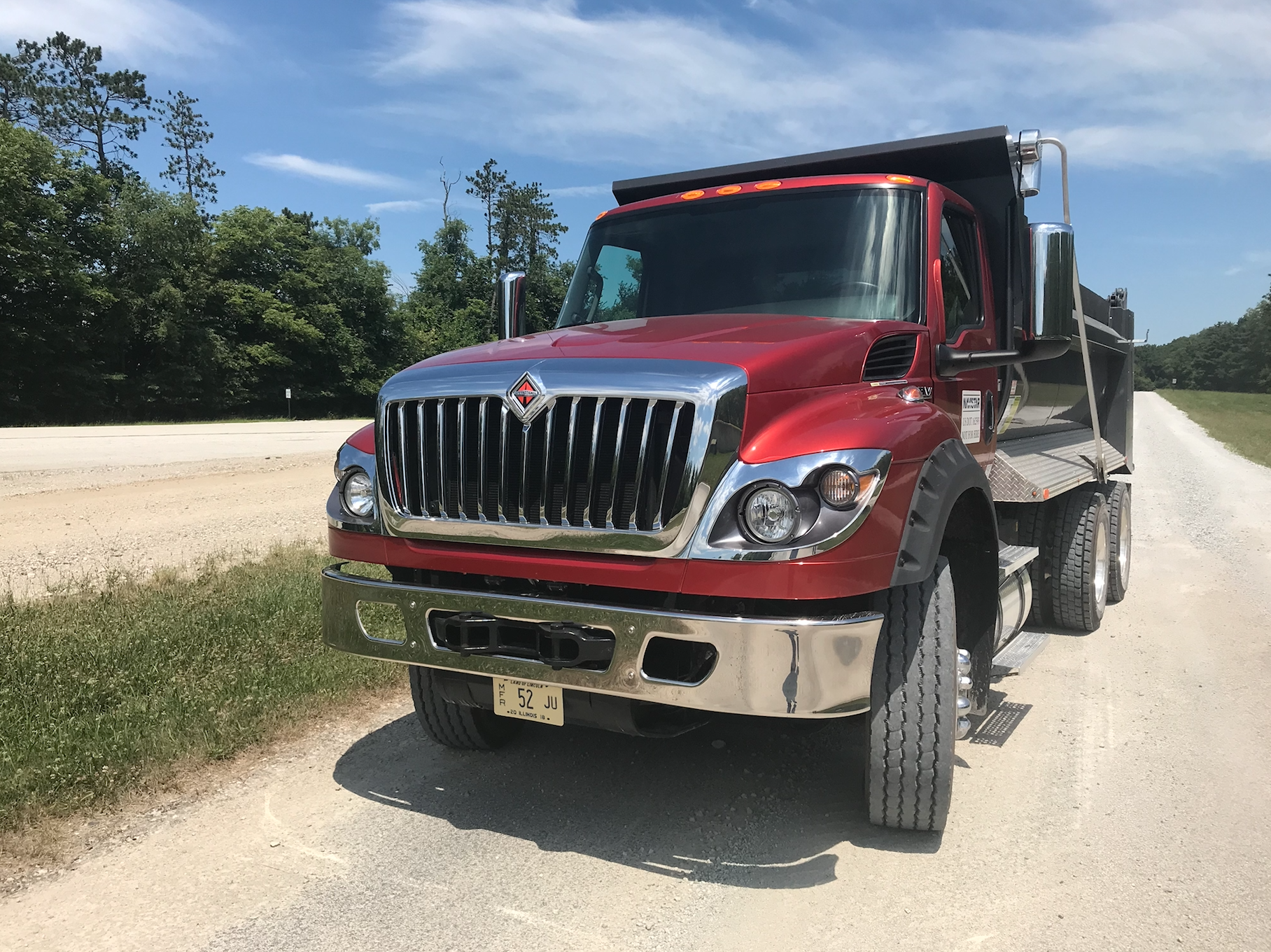
Severe duty and driver comfort aren’t two things that usually go hand-in-hand, but the inspired refinement of International’s HV Series lineup brings fit-and-finish to an unfamiliar place: the worksite work horse.
Featuring the same imposing hood and grille, the HV appears to be little more than a gussied up WorkStar – and for good reason. The Lisle, Ill., truckmaker used feedback from more than 100 vocational customers to shape the cab design features. With aerodynamic efficiencies well down the wish list, interior and safety upgrades got most of the attention.
The weather on my test drive – a warm, clear summer day in New Carlisle, Ind. – couldn’t have been more picturesque and the visibility through the glass could hardly have been more panoramic.
Following cues from International’s RH, LT and MV trucks, window sills were lowered and redesigned doors remove the vent window. The improved seals minimize air leaks and wind noise. Pedestal mirrors have been pulled forward, and a low-rake windshield improves visibility. A door-mounted airfoil helps keeps rain water off the side window.
An optional high-visibility hood is available on set-back axle models not equipped with front power take off, adding about 6-inches of downward slope to the grille and a line-of-sight improvement of about 7-feet to the ground. With an inside wheel cut of up to 50 degrees, the added visibility makes navigating tight turns and crowded streets easier and safer.
A new premium instrument cluster – the same unit featured prominently in the LT, RH and LoneStar – sits center of the driver, complete with driver information display. On upper trim levels you can get a larger screen that allows the driver to customize virtual gauges, pulling analog dial-based data off the dash panel and putting it in the driver’s field of view.
The gear selector for the standard Allison 6-speed automatic has been moved to a stalk on the steering column and features an integrated engine brake. The wing panel has been redesigned to increase knee room and an AC vent has been added for center seat riders.
You’ll want to spec a flat panel if you’re part of the three-person crew. The wing takes up some of what would be the center-rider’s legroom but if you’re a two-man group, the controls on the wing are easier for the driver to reach and that extra vent pumps out chilly air from the upgraded HVAC system on those hot construction jobs.
The dash panel has space for up to 30 customizable switches ensuring functionality for any type of body upfit. The switches, which were made larger so drivers can use them more easily while wearing gloves, also feature large easy-to-read text and are back lit for easier night viewing.
The fuse panel has been integrated in the top of the dash, another nod to the LT and RH.
The HV Series uses International’s Diamond Logic electrical system for the automation of tasks and interlocks to help protect both equipment and crew and ease the process of body upfitting. The Diamond Logic electrical system offers nearly 200 factory-available body integration and driver efficiency features, plus the ability to customize more vehicle functions.
In a dump configuration, for example, a fleet can software limit the truck’s top speed while the bed is extended. That allows drivers to spread sand or gravel but prevents them from hitting the highway before lowering the bed.
Under the truck you’ll find a Super Single half-inch thick fame rail rated up to 3.35M RBM and an integral – not bolt on – 20- and 27-inch frame extension that adds rigidity. For serious off-road applications, 20,000 lb. off-set bowl front drive axle allows for a lower ride height than a traditional center bowl and cross member anchored tow loops prevent frame twisting.
Unlike its beefier brother the HX Series, all-wheel-drive is available on the HV for service applications like crane and boom operators. Configurations range from 4×2 to 8×6 and BBCs of either 107- or 113-inch and set-forward or set-back front axles are available. A clean Cab-to-Axle configuration is also available. The HV comes standard with International’s A26 engine with a Cummins B6.7 or L9 engine available as options.
My test unit was outfitted with the A26. The 475 horsepower and 1,750 lb.-ft. of torque power plant was more than enough to force a truck that grossed just south of 44,000 pounds over a mixture of off- and on-highway conditions.
HV comes standard with air disc brakes, which come in handy with 5 tons of sand pushing you down steep grades. Severe service has been one of the most ardent supporters of drum brakes but the extra stopping power, coupled with ease of maintenance, makes a strong argument in this segment.
With the HV, International is targeting lighter-duty vocational applications that don’t need the brawn of an HX and want some of the comfort and finesse that comes from the company’s on-highway lineup.
Source: https://www.hardworkingtrucks.com/test-drive-international-hv/
7/21/18
Explore Masterack® Products

When it comes to choosing high quality, professional grade commercial vehicle equipment, Masterack is an industry leader with over 40 years of experience in product design, manufacturing, and installation. Our large selection of steel and composite van interiors, pickup equipment, ladder racks, and accessories are available as pre-designed trade packages or can easily be mix-and-matched to customize your vehicle.
Learn more at: http://masterack.com/
7/19/18
Very Sharp GMC 3500 with Harbor Flat Bed Body


Here's a sharp looking GMC 3500 with a Harbor flatbed. Looks great in the daylight and the LED Lights will light this body up at night. The Headboard has CNC or laser cut openings for great visibility with a galvanized solid steel lower section for maximum corrosion protection. The body has a treated wood floor and underbed boxes. This high quality flatbed that will last for years under all kinds of loads and uses
See more creations by Harbor Truck Bodies in Brea CA at http://www.htbi.net/, or call them at 800-433-9452.
7/17/18
Reducing Idling – Benefits and Outcomes
"Anything that we can do that takes the amount of fuel that you burn at idle out of the control of the person behind the wheel is what we're looking for." – Dakota County Minnesota Fleet Manager

When Kevin Schlangen, Fleet Manager of Dakota County Minnesota, sought out to source a solution to improve fuel economy for his 380- vehicle fleet, he desired an automated option. After implementing a solution provided by Derive, Schlangen’s vehicles experienced 6-15% improvement in fuel use. Translated into fuel cost and taking fuel price fluctuation into account, the Dakota County fleet would expect to save anywhere from $25-$70 per vehicle per month. A substantial amount when multiplied across their entire fleet.
With fuel costs being an unpredictable expense, seeking out ways to reduce fuel costs is more and more common of fleet managers today. Though some managers are following in Kevin’s footsteps and relying on fleet vehicle technologies to reduce idling, others are implementing anti-idling programs aimed to educate and incentivize drivers into idling more efficiently. Knowing that the amount of vehicles on U.S. roads has continuously increased over the past years and is currently near 268 million, reducing idling is growing in importance for more reasons than one.
To Improve the Bottom Line
Whether it be a small, medium or enterprise sized fleet, fuel costs can impact the bottom line considering their unpredictability and that fuel is a major part of fleet operating spend. In a recent fuel use chart provided by Minute Man Trucks, every hour of idling wastes nearly one gallon of fuel. When a fleet vehicle is in-between stops or paused in traffic, fuel is being wasted which directly relates to fleet fuel costs and wasted spend. For example: With a fleet of 100 vehicles, a daily idling of one hour a day per vehicle can result in nearly $9K in fuel cost losses a month assuming fuel costs are around $3 per gallon. While idling cannot be fully eliminated, there is no denying that reducing it can significantly benefit operating costs.
To Improve the Vehicle Health
Idling not only impacts fuel costs which are part of operational spend, idling can also impact the lifetime of the vehicle. Wear and tear on a vehicle engine can lead to engine performance issues. Over activation of the vehicle engine can result in increased vehicle maintenance and thus, increased operating costs. Aside from fuel costs, vehicle oil changes and fuel check-ups can all increase as a result of excessive idling. None of which positively impacts the overall lifecycle of the vehicle and provides even more reason to tackle the idling issue before it adds to expenses.
To Avoid Costly Idling Fines
Costs associated with fleet fuel are one reason to reduce idling. Costs associated with idling fines are another. Idling in some scenarios is required. For instance, when a law enforcement vehicle needs to power on-board equipment via power take-off (PTO). Or when weather related scenarios make it difficult to start driving immediately before warming up. No matter how normal or seemingly harmless such scenarios seem, many states nationwide are cracking down on permitting idling when it doesn’t seem to be needed.
According to the E.P.A 31 states and Washington, D.C. have put in place regulations that prohibit vehicle idling. Variances between on length of idling time permitted, weather related exceptions and fines per penalty are all dependent on state. These fines can set fleets back in cost quite a bit but can be avoided with the right fleet vehicle technology.
For the Health of Our Climate
The health of the population is not the only health that is of concern when it comes to emissions. Vehicle idling is a known contributor to climate change. When looking at sources of greenhouse gas emissions within the U.S., transportation is a large piece of the pie chart. According to the U.S. Environmental Protection Agency, in 2016 greenhouse gas emissions from transportation accounted for around 28.5 percent of the total of U.S. greenhouse gas emissions. This percentage was the largest contributor in comparison to agriculture, industry, electricity and commercial and residential contributors.
Knowing that fleet trucks consume more fuel per mile and are typically driven more than most other vehicles, reducing fleet vehicle idling can make a significant impact in our efforts to offset climate change driven by greenhouse gas emissions.
Solutions to Reduce Idling
With driver training and coaching reducing idling can be achieved and benefits can be experienced. In addition to manager-led driver training, fleet technology exists today that can help reduce idling automatically and without driver intervention. Utilizing fleet telematics solutions can assist fleets in identifying where idling reduction can occur within operations. Solutions, such as Derive go beyond telematics insights to proactively reduce idling. Being able to set manager defined idle shut-off parameters can enable fleets to experience benefits sooner rather than later. When combined with driver education, the potential for improved operations and ability to reduce costs associated with idling becomes even more attainable.
Sometimes unavoidable, vehicle idling is a costly and environmentally harmful act that needs more attention from all. Though some modern vehicles now offer engine shut-off functionality, service vehicles built for utility and vehicles built before such technology existed hold the biggest opportunity to reduce idling. Fleet managers responsible for vehicle operations of any size should look into technologies that reduce idling as effortlessly as possible. The results could be a savings to the bottom line much like Kevin Schlangen, of Dakota County, Minnesota or even greater, a healthier climate and safer air quality. More than enough reason to take action.
About Contributor
Derive is an automotive technology company that empowers fleet managers to optimize their fleet’s performance beyond traditional telematics and driver training. Derive’s solution customizes fleets to be more fuel efficient, safer, and sustainable by using software that upgrades vehicle operating systems. With over 2 million software installations, Derive has transformed fleet performance from one-size-fits-all to mission-specific.
Source: https://www.worktruckonline.com/305671/reducing-idling-benefits-and-outcomes
7/15/18
Vanair PowerFlex - Options for Air Compressor, Generator and Hydraulics
A brief description of the features of PowerFlex Product Series from Vanair.
Subscribe to:
Posts (Atom)